On this page
Training budgets are increasing. Patience is not.
Companies in Singapore want an LMS that fits their needs perfectly, and they want it live by tomorrow. Search for the top LMS development companies in Singapore and you’ll see the same promises everywhere: scalable, customisable, trusted by leading brands.
Here’s the catch. Nobody tells you how the system will be developed, how long support will last, or what you will own if the project fails.
That’s what this guide is for. We curated this list by checking each company’s experience, platforms and client feedback. You’ll also see typical prices and learn how to spot red flags before signing a contract.
Key takeaways
- Compare 15 LMS development companies in Singapore on services, expertise and capabilities.
- See which providers offer custom LMS development, Moodle, mobile learning and AI features.
- Understand LMS development costs in Singapore, from basic platforms to enterprise solutions.
- Get practical tips for choosing the right LMS partner and spotting red flags.
- Weigh custom LMS development against ready-made platforms to find the right fit.
Top LMS development companies in Singapore at a glance
The table compares all 15 providers on the capabilities buyers ask about most. Filter it to the one you need, or jump straight to a company’s full profile.
Showing all 15 companies.
| Company | Founded | Custom LMS | Moodle | Mobile | AI | SkillsFuture | Best for |
|---|---|---|---|---|---|---|---|
| 01eLearning23 | 2006 | ✓ | ✓ | ✓ | ✓ | – | Enterprises needing custom LMS, complex integrations and AI-assisted learning |
| 02Kydon | 2003 | ✓ | ✓ | ✓ | ✓ | – | Organisations needing customised learning platforms and enterprise integrations |
| 03Wizlearn Technologies | 2000 | ✓ | – | ✓ | – | ✓ | Organisations managing structured training and course administration |
| 04Tertiary Infotech Academy | 2012 | ✓ | – | ✓ | ✓ | ✓ | Singapore training providers needing local training and compliance workflows |
| 05TechTIQ Solutions | 2017 | ✓ | – | ✓ | ✓ | – | Organisations needing a custom LMS connected to existing systems |
| 06DL Ideas | 2015 | ✓ | – | ✓ | – | – | Schools, tuition centres and training providers needing education admin software |
| 07Tigernix | 2006 | – | – | – | – | ✓ | Training centres managing courses, attendance, assessments and trainee records |
| 08e-Learning LMS | 2022 | – | ✓ | – | – | – | Organisations needing Moodle implementation, hosting and technical support |
| 09Scheer IMC | 1997 | – | – | – | ✓ | – | Large organisations with complex workforce training requirements |
| 10Matriye Technologies | — | ✓ | – | ✓ | – | – | Organisations needing a white-label LMS, mobile learning and subscriptions |
| 11Saigon Technology | 2012 | ✓ | – | ✓ | ✓ | – | Enterprises, universities and EdTech companies needing custom LMS integrations |
| 12HashMicro | 2015 | – | – | – | ✓ | – | Organisations combining learning with ERP, HR, finance and operations |
| 13Verztec Learning | 2000 | ✓ | – | ✓ | – | – | Multinationals needing corporate learning across languages and regions |
| 14IntelSoft | — | – | ✓ | – | ✓ | ✓ | Singapore organisations needing a Moodle-based LMS with local integrations |
| 15Aqelora Solutions | — | ✓ | – | ✓ | ✓ | – | Smaller businesses and education organisations seeking digital learning platforms |
Capabilities are based on each company’s published services. “–” means not publicly stated, not that it cannot be done.
The top 15 LMS development companies in Singapore, compared
Each profile covers LMS services, technology expertise, industries served and the type of buyer it suits best.
eLearning23
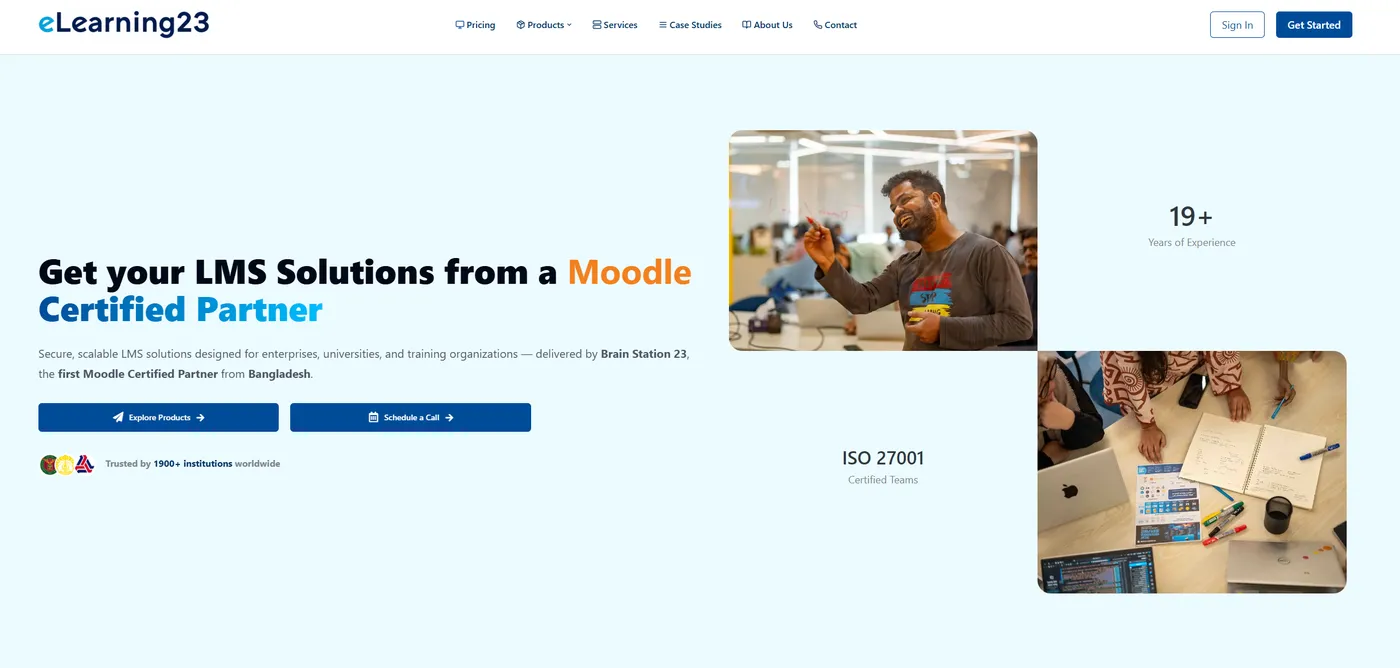
eLearning23 is a strong option for organisations that want more than a learning platform. It is the LMS practice of Brain Station 23, backed by 900+ professionals and 20+ years of software delivery for enterprises, universities and training organisations.
Its capabilities cover Moodle implementation, custom LMS development, LMS migration, enterprise learning platforms and AI-driven online proctoring, which makes it a good fit for organisations with complex LMS needs.
LMS development services
- Custom LMS development
- Moodle implementation
- LMS migration
- Enterprise LMS solutions
- Complete eLearning platforms
- AI-powered personalisation
- AI integration
- Online proctoring
- Custom dashboards
- Learner progress tracking
- Reporting management
- Assessment management
- Certification management
- Custom plugin development
- Theme development
- Integrations with existing systems
- Performance optimisation
- LMS security
Technology expertise
Moodle, SCORM, xAPI, H5P, AWS, AI/ML, and ERP, CRM and HRIS integrations. Mobile delivery through Flutter, iOS and Android.
Industries served
Education, corporate training, government, financial services, healthcare and the public sector.
Why consider eLearning23?
eLearning23 builds custom LMS platforms for enterprises and large organisations, using SCORM, xAPI, H5P, AWS and Moodle, and integrates them with existing ERP, CRM and HRIS systems. Its mobile and AI capabilities, including AI-assisted proctoring, support modern learning environments.
Brain Station 23 is CMMI Level 3, ISO 9001 and ISO 27001 certified, and holds an official Moodle Certified Integration for AI proctoring.
Enterprises that need a custom LMS, complex integrations and AI-assisted learning, delivered by one team that combines software engineering depth with LMS specialisation.
Kydon
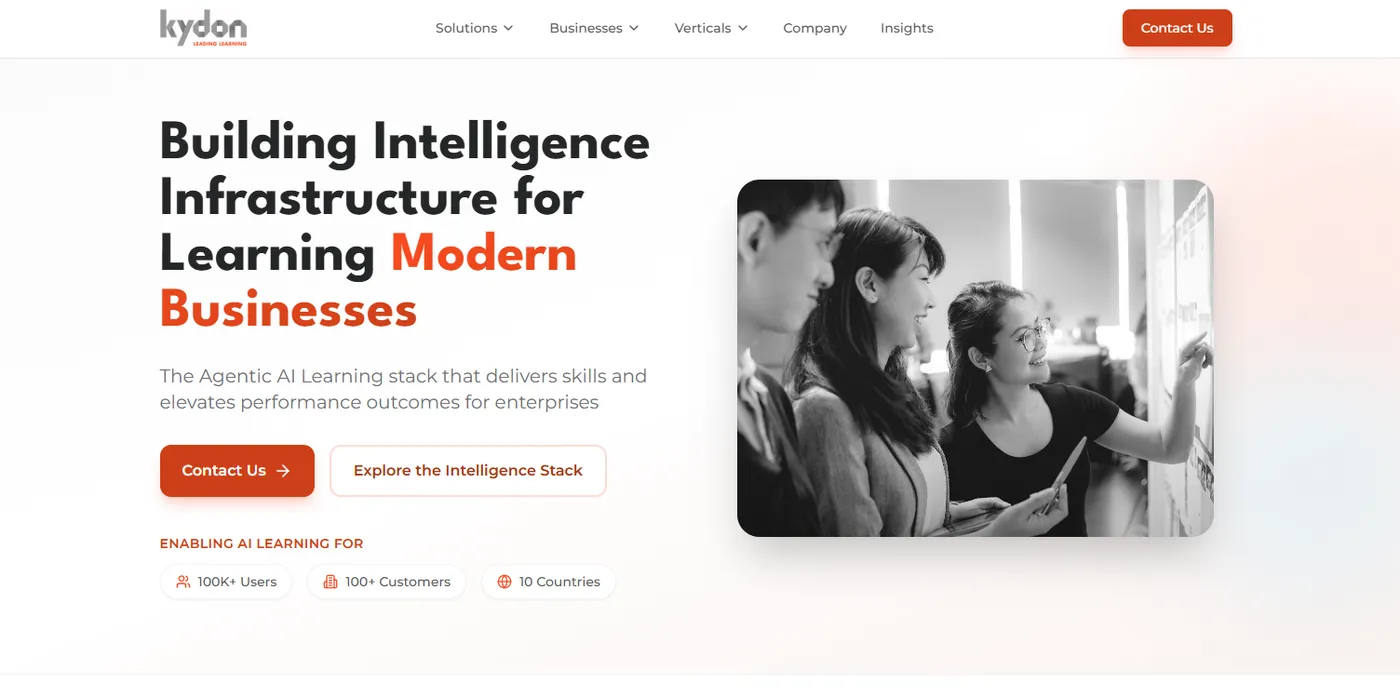
Kydon is a Singapore-based learning technology company that also operates in Malaysia and Indonesia. It serves organisations across Southeast Asia, helping modernise workplaces through digital learning solutions.
LMS development services
- LMS development
- LMS customisation
- Digital learning solutions
- AI agent-enabled learning
- Mobile learning
- Personalised training
- Learning system integration
Technology expertise
Mobile and web learning, cloud-native applications, enterprise APIs, AI, and integration with organisational systems.
Industries served
Enterprises, government organisations, schools and professional training organisations.
Singaporean enterprises, government agencies and educational organisations that want a customised learning platform with mobile learning, personalisation and enterprise system integration.
Wizlearn Technologies
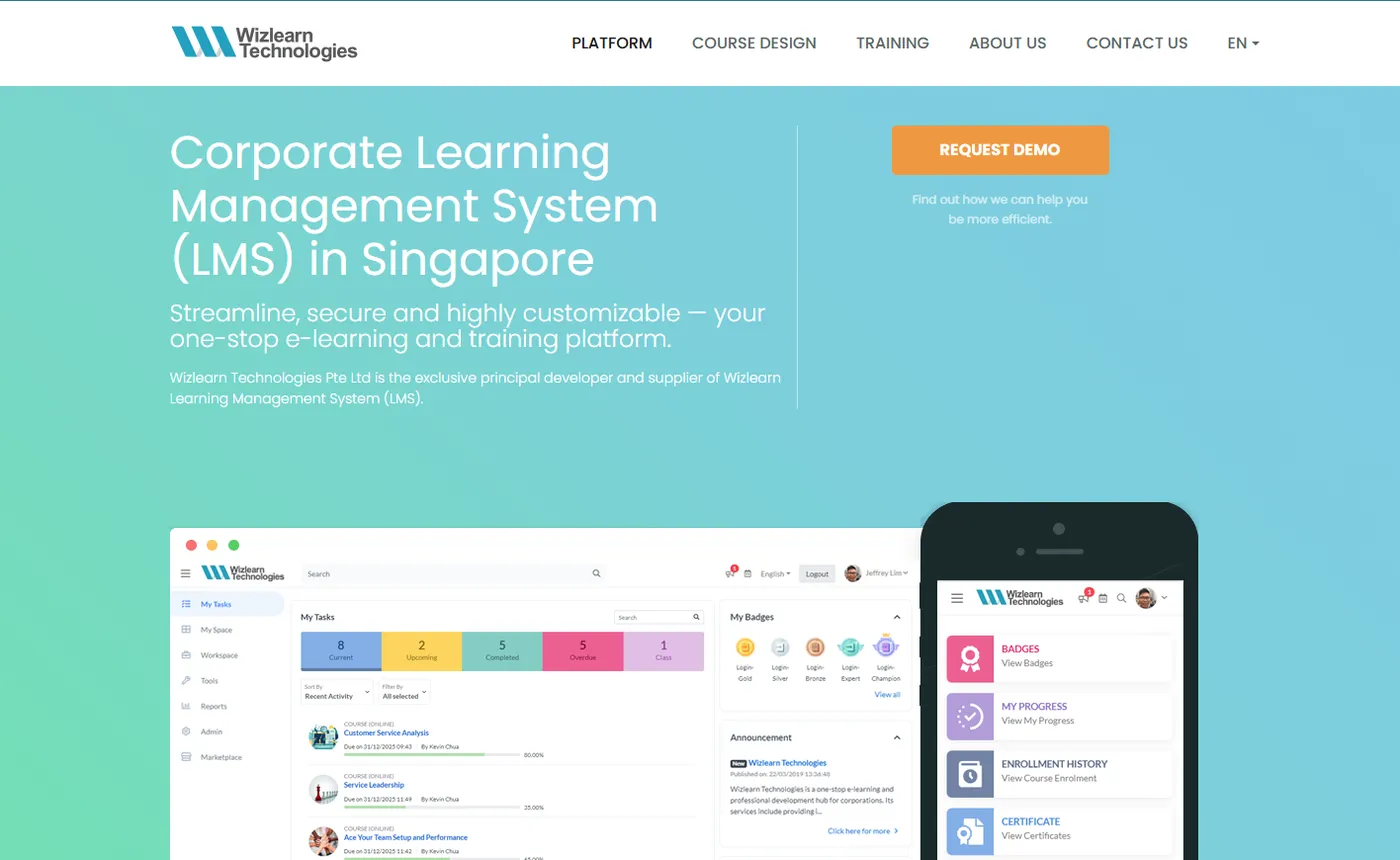
Founded in 2000, Wizlearn Technologies is a Singapore-based learning technology company closely tied to the local education and corporate training landscape. It builds customisable LMS solutions that keep structured learning organised.
LMS development services
- LMS
- TMS
- eLearning
- Course authoring
- Learning paths
- Assessments
- Certification
- Registration
- Reporting
- Mobile LMS
Technology expertise
SCORM, HTML, custom LMS, online course creation, SkillsFuture Singapore integration, Stripe for course marketplaces and video conferencing integration. The platform has 300+ configurable functions for rapid customisation.
Industries served
Corporate training, government, education, professional training and other organisations with structured learning programmes.
Organisations that want a Singapore-based LMS with course management, assessment, training administration and SkillsFuture-related integration.
Tertiary Infotech Academy
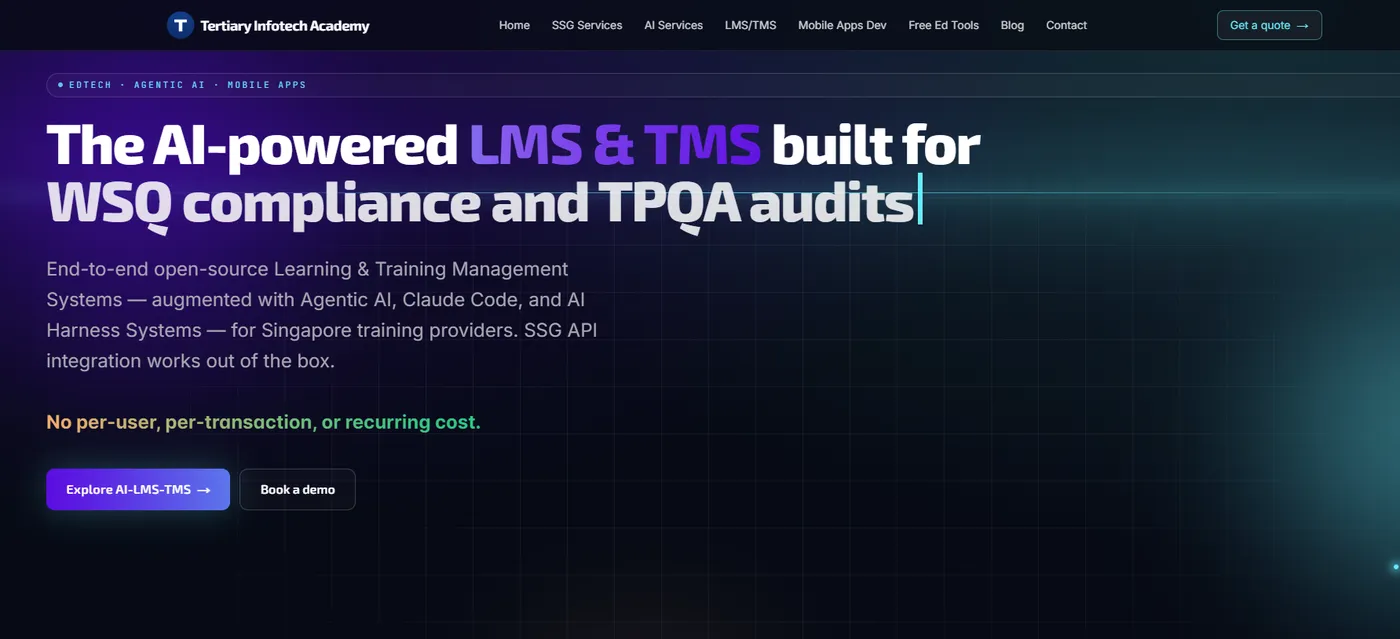
Tertiary Infotech Academy is a Singapore-based EdTech company focused on professional training. It maintains WSQ compliance, delivers LMS and TMS development, and specifically targets Singapore's SkillsFuture training ecosystem.
LMS development services
- AI-powered LMS
- TMS solutions
- Course management
- Learner tracking
- Assessments
- Certification
- Attendance
- Audit reporting
- Self-hosted learning platforms
Technology expertise
SSG APIs, TPGateway, MySkillsFuture, Google Meet, Zoom, Microsoft Teams, AI chatbots, AI-generated quizzes and multi-role dashboards.
Industries served
Training providers, WSQ organisations, professional training bodies and adult education organisations.
Singapore training providers that need WSQ-focused LMS/TMS functionality, SkillsFuture integration, compliance workflows and AI-assisted training management.
TechTIQ Solutions
Founded in 2017, TechTIQ Solutions is headquartered in Singapore and runs a hybrid Singapore–Vietnam team. Alongside wider software development, it builds LMS platforms covering learning management, assessments, reporting, mobile learning and integrations.
LMS development services
- Custom LMS development
- Course authoring
- Learner management
- Progress tracking
- Reporting
- Analytics
- Virtual classrooms
- LMS integration
Technology expertise
iOS, Android, AI/ML, adaptive learning, AR/VR, React, Node.js, cloud, SCORM, xAPI, HRMS, CRM, Zoom, Google Workspace and payment gateway integration.
Industries served
Education, enterprises, healthcare, EdTech, finance, eCommerce, logistics and media.
Businesses, schools, universities and EdTech companies that need a custom LMS connected to existing business systems, mobile apps or advanced learning technologies.
DL Ideas
Established in 2015, DL Ideas is a Singapore-based IT company focused on education software for organisations with formalised learning programmes.
LMS development services
DL Ideas develops SmartEdu, an education and training management platform for adult training providers, tuition centres, enrichment centres and schools. It covers course and student management, attendance, assessments, payments, scheduling, reporting, audit trails and learner portals.
Technology expertise
Web-based education platforms, custom TMS, mobile applications, APIs, payment systems, reporting dashboards and training management workflows.
Industries served
Education, adult training, tuition, enrichment, schools, finance, healthcare and other service businesses.
Singapore schools, tuition centres, training providers and education businesses that want course, learner, attendance, payment and training management in one platform.
Tigernix
Founded in 2006, Tigernix is headquartered in Singapore with operations across Indonesia, Malaysia, Australia and Sri Lanka. It provides learning and training software through its off-the-shelf Training Management System and LMS solutions.
LMS development services
- Course management
- Trainee registration
- Attendance tracking
- Examinations
- Online trainee portals
- Training schedules
- Reporting
- Analytics
- Customisable modules
Technology expertise
APIs, microservices and SSG TPGateway integration. It can connect training data with Skills Passport records and related Singapore training services.
Industries served
Education, professional training, corporate training and 30+ other industries through its broader software portfolio.
Training centres and educational organisations that need course administration, trainee management, assessments, scheduling, reporting and SkillsFuture integrations.
e-Learning LMS
E-LEARNING LMS PTE. LTD. was established in September 2022 to provide LMS consulting, development, maintenance and SaaS services in Singapore. Its core offering is LMS development on the Moodle ecosystem, adapted to each organisation.
LMS development services
- LMS consulting
- Implementation
- Development
- Maintenance
- Hosting
- Support
- Training
- SaaS-based LMS delivery
- Proprietary Moodle plugins
Technology expertise
Moodle, Moodle Workplace, proprietary Moodle plugins, cloud-based LMS delivery and learning analytics, including a partnership with IntelliBoard.
Industries served
Universities, schools, companies, training organisations, government, medical institutions, academic societies and non-profits.
Organisations that want a Moodle-based LMS with professional implementation, hosting, maintenance, custom plugins and long-term technical support.
Scheer IMC
Scheer IMC is a Germany-headquartered learning technology company founded in 1997, with a Singapore office among its international locations. It offers digital learning services for large organisations and enterprises.
LMS development services
Its flagship IMC Learning Suite is an enterprise LMS for large organisations, supporting core learning management, training administration, blended learning, learning paths, modular extensions and configurable enterprise workflows.
Technology expertise
Cloud and on-premises deployment, SCORM, xAPI, LTI, connectors, APIs and other enterprise interfaces, plus AI-assisted content creation through IMC Express.
Industries served
Large enterprises, manufacturing, insurance and other organisations with complex workforce training requirements.
Large enterprises that need a mature enterprise LMS with extensive configuration, integrations, compliance features and structured learning management.
Matriye Technologies
Matriye Technologies is headquartered in Singapore, with offices in the UAE, USA and Jordan. Its core business is broader technology services, and it provides LMS development alongside AI and other software work.
LMS development services
- Live and recorded courses
- Assessments
- Quizzes
- Certifications
- Gamification
- Progress tracking
- Multi-tenant white-label LMS
- Payment integration
- Subscriptions
- Mobile learning apps
Technology expertise
React, Node.js, Flutter, Firebase, AWS and MongoDB.
Industries served
Schools, universities, corporate training teams, EdTech startups and other businesses that need digital learning platforms.
EdTech startups, universities, schools and corporate training teams seeking a custom, white-label LMS with mobile learning, subscriptions, assessments and gamification.
Saigon Technology
Saigon Technology was founded in 2012 and has a Singapore office supporting regional clients. It holds ISO 9001 and ISO 27001 certifications and provides LMS development among its wider software services.
LMS development services
- Custom LMS development
- Enterprise LMS platforms
- LMS migration
- White-label learning systems
- Mobile LMS
- LMS integration
Technology expertise
SCORM, xAPI, LTI 1.3, OneRoster and QTI, plus iOS, Android, Flutter, React Native, AI learning features, SSO, CRM, ERP, HRIS, payment and video platform integration.
Industries served
Higher education, EdTech, corporate L&D, healthcare, finance and government.
Enterprises, universities, EdTech companies and training providers that need a custom LMS with extensive integrations, mobile support or established learning standards.
HashMicro
HashMicro was founded in 2015 and is headquartered in Singapore. It develops business software, eLearning platforms and ERP solutions, connecting digital learning with an organisation's wider operations.
LMS development services
HashMicro offers an eLearning and LMS product covering course management, learner portals, learning paths, assessments, progress tracking and reporting.
Technology expertise
AI-assisted course creation and learning insights, with integrations through HashMicro's broader cloud ERP and business software.
Industries served
Education, corporate training, and businesses that need employee learning alongside operational management.
Educational institutions and businesses that need LMS functionality alongside ERP, HR, finance and other business management systems.
Verztec Learning
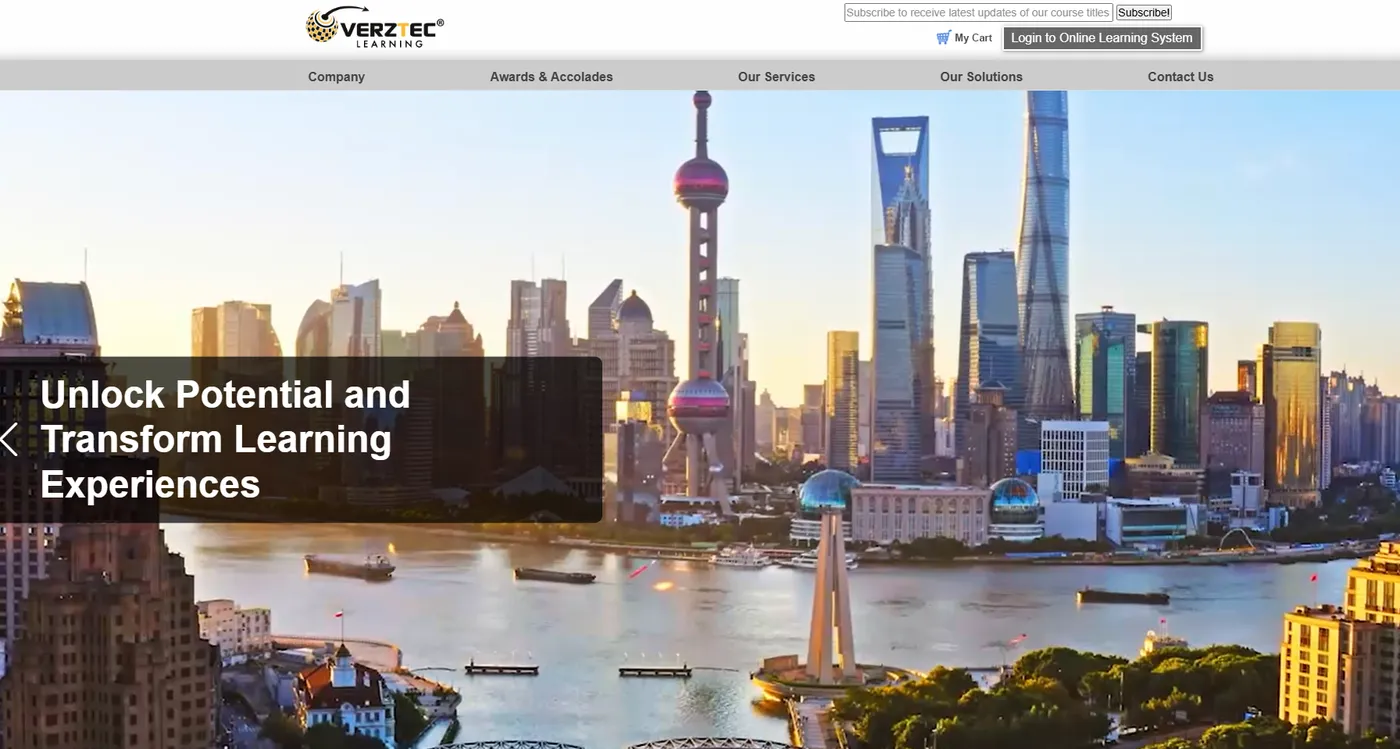
Verztec was founded in 2000 and is headquartered in Singapore. It has long experience in corporate learning and LMS development, working with organisations in finance, manufacturing, healthcare, technology, travel and hospitality.
LMS development services
- Custom LMS development
- eLearning platform development
- Training digitisation
- Course development
- Branded interfaces
- Learning paths
- Custom reports
- Certifications
- Badges
- Learner dashboard
- Manager controls
Technology expertise
iOS and Android LMS support, Zoom integration, virtual classrooms, digital learning content, custom reporting and multilingual course delivery.
Industries served
Education, automotive, banking and finance, legal, manufacturing, advertising, medical and life sciences, technology, travel and hospitality.
Multinationals and large organisations that need custom LMS development alongside multilingual eLearning content and global learning delivery.
IntelSoft
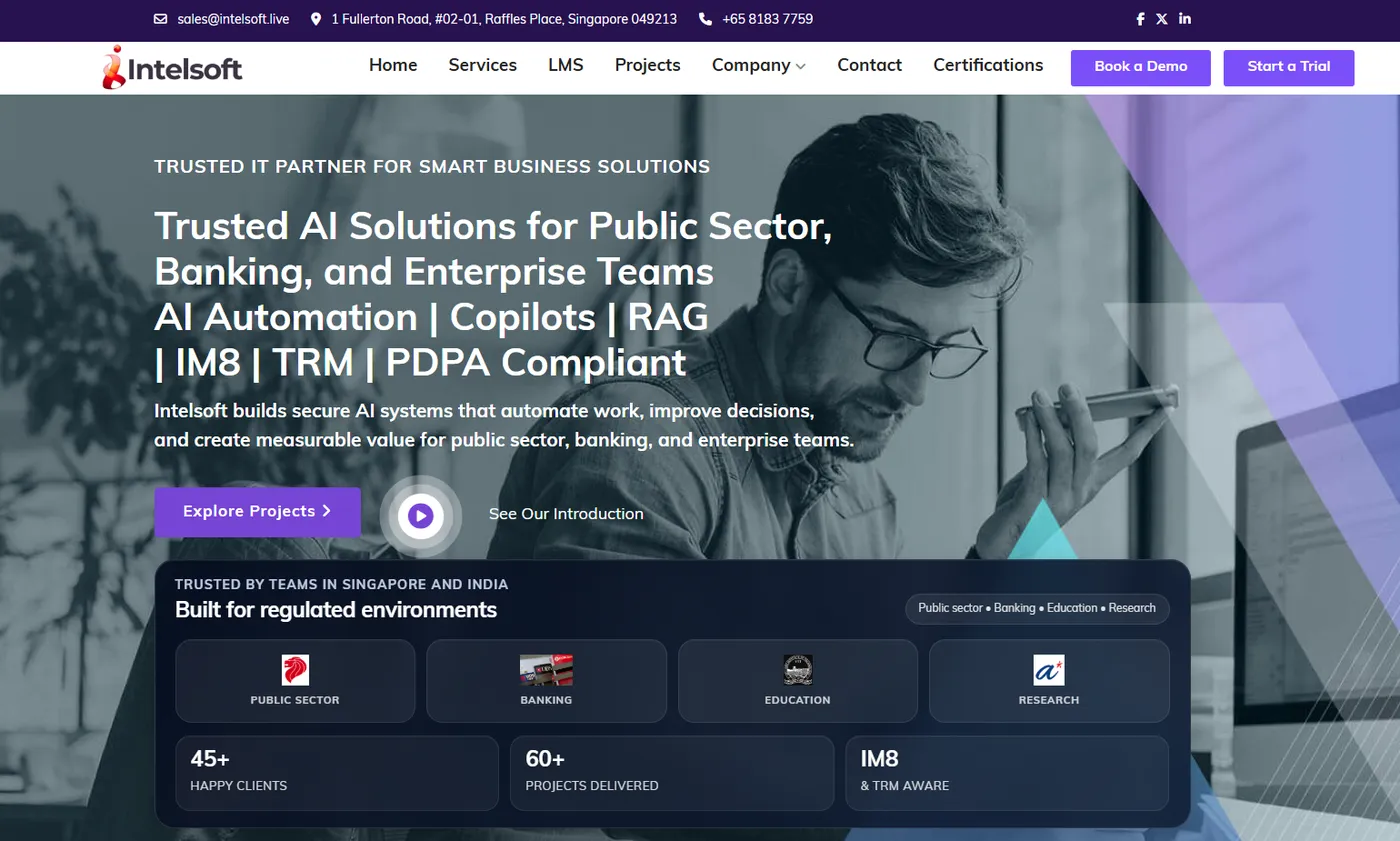
IntelSoft is a Singapore-based technology company with 10+ years of IT experience across AI, cloud and enterprise software. It offers an enterprise LMS built on Moodle and customised for public-sector and enterprise requirements.
LMS development services
- Course management
- Learner dashboards
- Assessments
- Certification
- Reporting
- Governance
- Security
- AI-assisted learner support
- LMS integration
Technology expertise
Moodle, PHP, MySQL, Microsoft Azure, SCORM, xAPI, role-based access, SSO and AI support, plus Singapore-specific integrations including Singpass, SkillsFuture Credit and TPGateway.
Industries served
Public sector, banking, education, research, corporate training and regulated organisations.
Singapore enterprises and public-sector organisations that need a secure Moodle-based LMS with local integrations, compliance controls, reporting and AI-assisted support.
Aqelora Solutions
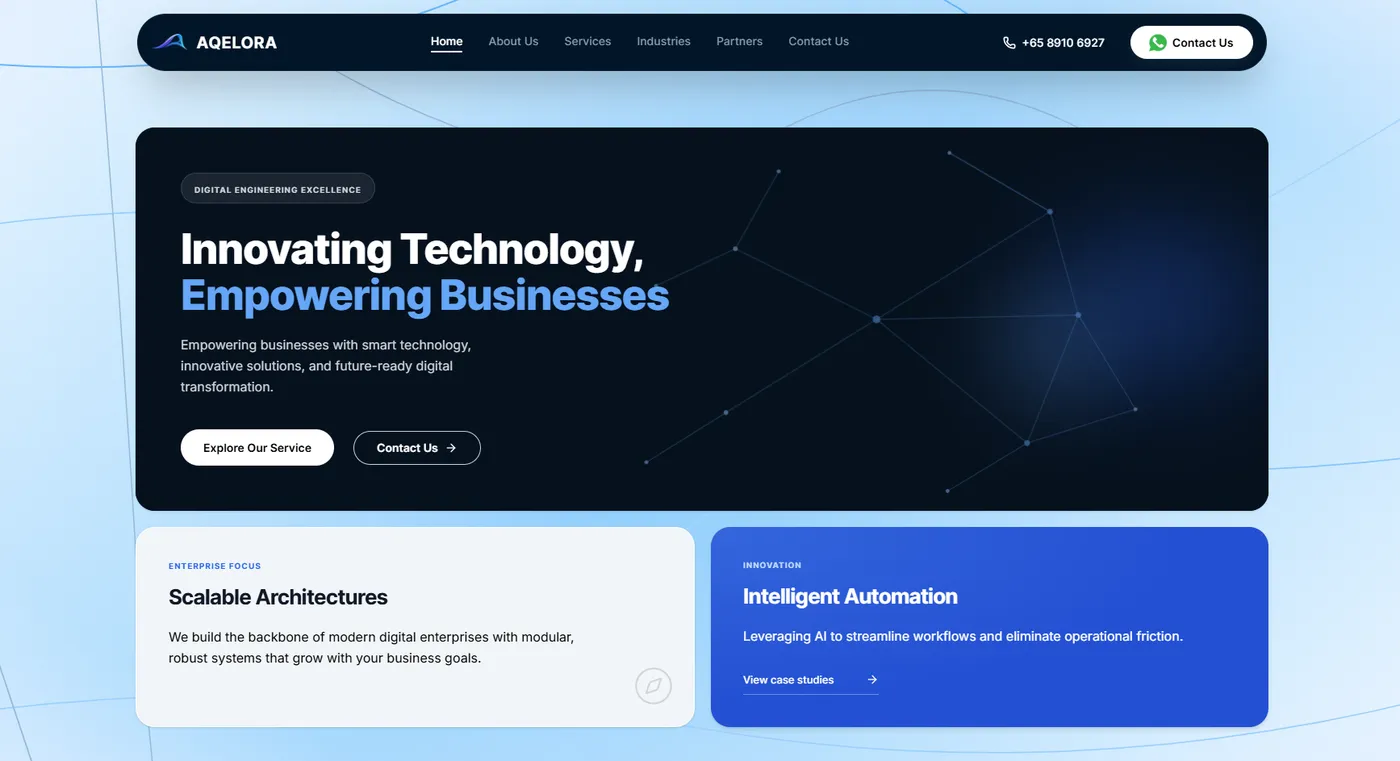
Aqelora Solutions is a Singapore-based technology company headquartered at Paya Lebar Square. It provides software development, digital transformation, cloud, mobile, HRMS and LMS development services.
LMS development services
Its LMS work focuses on digital learning platforms, content delivery, automated assessment and learner engagement.
Technology expertise
Enterprise LMS, Android and iOS development, AI-driven automation and custom LMS development.
Industries served
Corporate, education, travel, eCommerce and hospitality.
Small businesses and education organisations seeking an LMS to streamline learning and skill development.
How much does LMS development cost in Singapore?
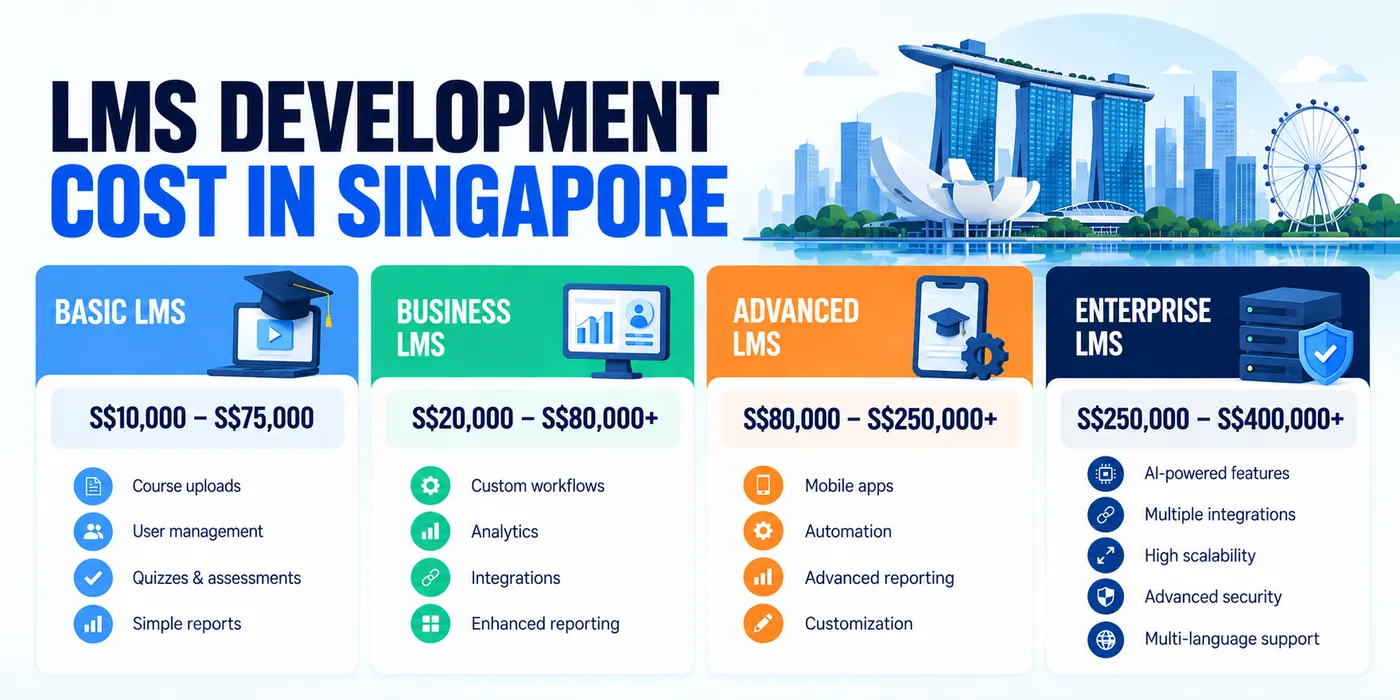
In Singapore, most LMS development projects cost between S$10,000 and S$250,000. The final figure depends on scope, features and the team you hire. The low end buys a simple platform; the high end buys a complex enterprise system.
Courses, users, assessments, basic reporting
Custom workflows, analytics, integrations
Mobile apps, automation, advanced reporting, customisation
AI, multiple integrations, high scalability, advanced security
Configure your platform to get a personalised Singapore estimate.
What will your LMS cost to build in Singapore?
Configure your learning platform to estimate a 2026 build budget, delivery timeline and team size. Compare Singapore agency delivery with regional and offshore teams. This is a planning estimate, not a quote.
References: Cipher Projects, Singapore software development cost and rate guide (2026); FutureTech, Singapore software development cost guide (2026); Enfin Technologies, custom LMS development cost guide (2026); Singapore PDPC, PDPA data protection obligations. Treat results as a starting budget, not a quote or legal advice.
What affects LMS development cost?
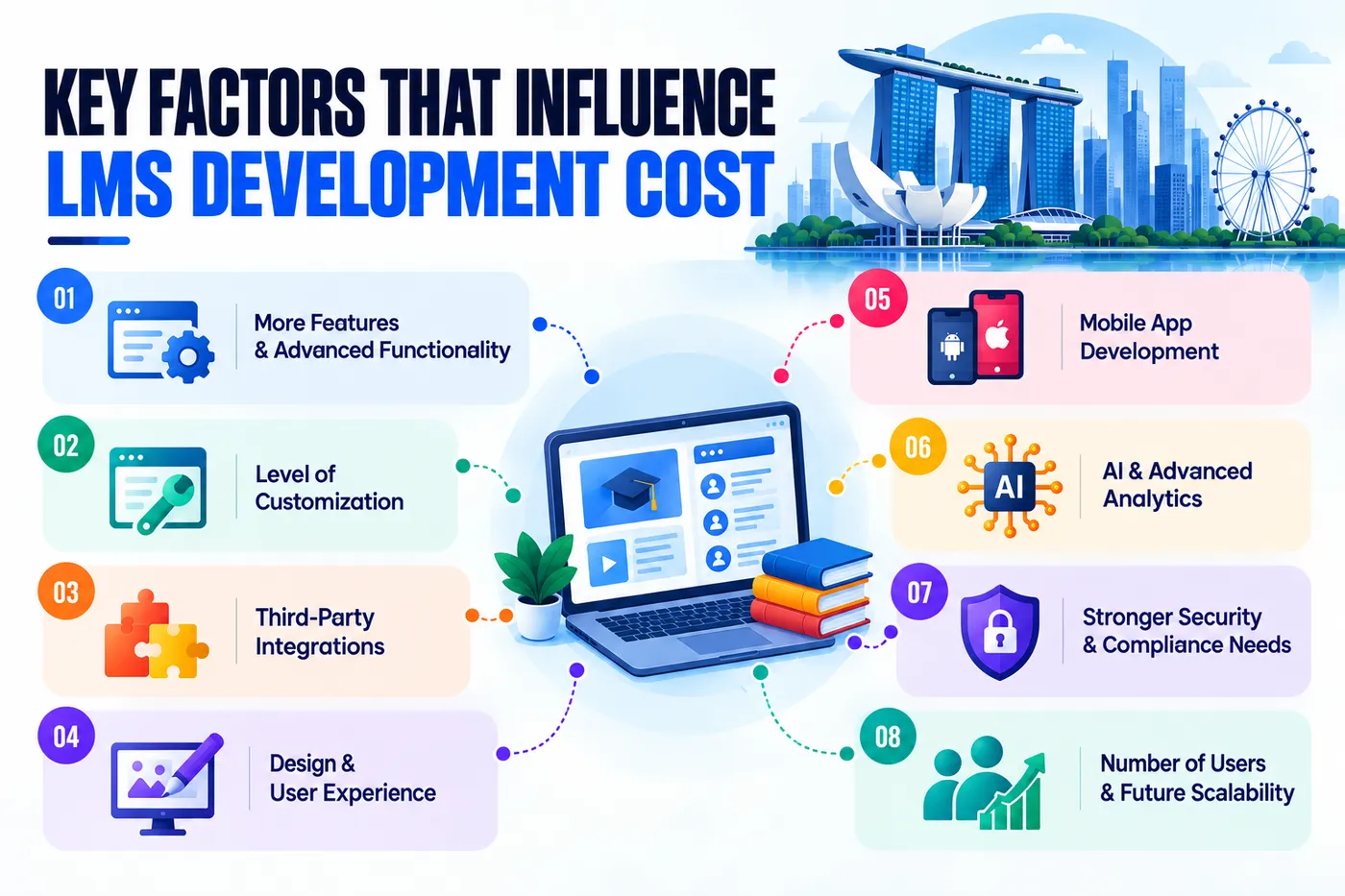
Features and complexity
More modules mean more hours. Gamification, AI and live classes cost more than basic course delivery.
Customisation level
A custom build costs more than a modified template. Customising an existing platform such as Moodle usually costs less.
Third-party integrations
Connecting HR software, CRM tools and payment gateways adds work, and each integration adds cost.
Design and user experience
Branded interfaces and personalised learning paths need more design time than standard layouts.
Mobile applications
Dedicated Android or iOS apps increase development and testing effort.
AI and analytics
Recommendations, automated content and predictive analytics need extra engineering.
Security requirements
Stronger authentication, access controls, audit logs, encryption and compliance measures add scope.
User and system scale
An LMS for 500 users has different infrastructure needs from one for tens of thousands of learners.
How to choose the right LMS development company in Singapore
Many LMS development companies in Singapore make the same promises and list the same features. The real differences show up in how they work and how they treat clients after delivery. Work through these checks in order.
Start with your own requirements
Before contacting vendors, write down your goals: learner count, training types, required integrations, budget and launch date. A clear brief makes vendors comparable and stops them selling features you don’t need.
Check their portfolio and industry experience
Ask for case studies that match your sector and size. A team that has built an LMS for organisations like yours will understand your compliance rules, reporting needs and user behaviour.
Look at technical depth
A good LMS developer can explain their stack, hosting options and security practices plainly. Ask about data protection under Singapore’s PDPA, single sign-on and API support. If they dodge these questions, move on.
Compare customisation options
Some companies only adjust templates; others build from scratch. Ask what customisation looks like in practice for branding, workflows, user roles, gamification and analytics, and read the scope before you sign.
Review integration capabilities
Your LMS should connect to HR software, CRM tools, video platforms and payment gateways. Ask which systems they have integrated before and request a live demo of at least one.
Understand the development process
Good vendors share a timeline, milestones and a testing plan. Ask how they handle scope changes and who your point of contact will be. Agile teams that deliver every couple of weeks tend to stay on track.
Ask about support and maintenance
Launch is only the start. Confirm what post-launch support covers: bug fixes, security patches, updates and admin training. Check the SLA response times.
Get transparent pricing
Ask for a quote that breaks out design, development, hosting and support. Cheap quotes can hide extra charges, so compare total cost of ownership over three years, not just the build price.
Verify reputation and reviews
Check Clutch, Google Reviews and LinkedIn for consistent ratings, repeat clients and projects delivered on time.
Common mistakes to avoid when choosing an LMS development company
The wrong partner can mean blown budgets, a platform nobody uses and an expensive rebuild. Watch for these warning signs.
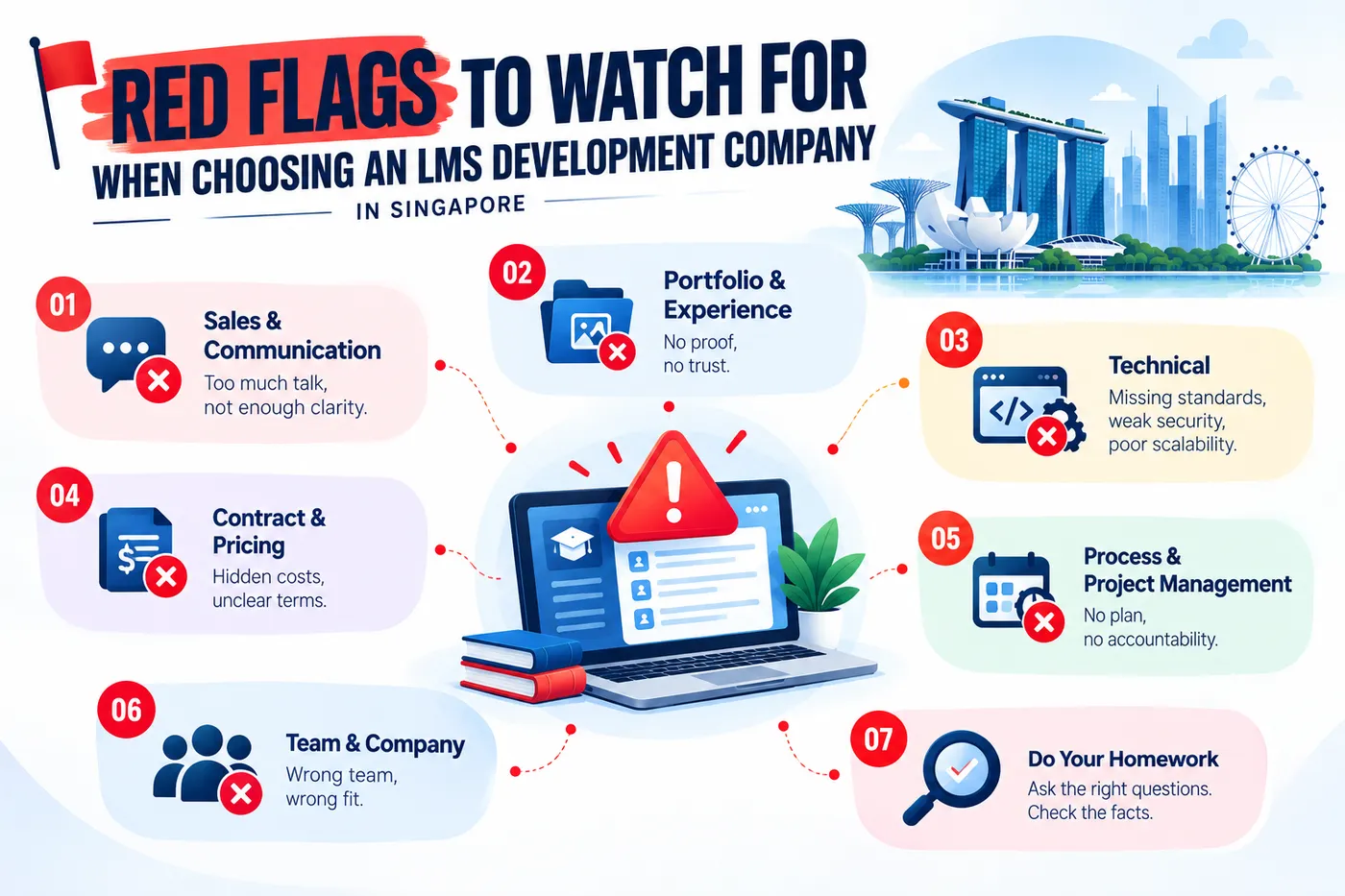
Choosing on price alone
The lowest estimate may leave out testing, integrations, security, maintenance or post-launch support. Compare the full development and support package before comparing prices.
Skipping the requirements conversation
Jumping straight to demos is backwards. Write a short brief covering user groups, compliance needs, reporting goals and existing tools. A serious developer will challenge it; a weak one will simply agree.
Not checking LMS-specific experience
General software experience is not the same as LMS expertise. Review their previous LMS builds, case studies, integrations and relevant client work.
Ignoring integration and scalability
An LMS rarely works alone, and poor integration means staff enter data twice. Ask whether the platform can handle 10x your current users, and ask about hosting, performance testing and API documentation.
Underestimating security and compliance
Learner data includes names, emails, performance records and sometimes payments. Ask about encryption, role-based access, audit logs and regular penetration testing, plus SCORM, xAPI and data-protection support.
Ignoring customisation limits
Some vendors customise an off-the-shelf product until they hit its limits. Confirm upfront which workflows, dashboards, roles, reports and integrations you need, and that they can deliver them.
Treating integrations as an add-on
Your LMS may need to connect to HRMS, CRM, ERP, SSO or payment systems. Treat integration as a core requirement and ask which APIs and standards the provider has delivered.
Treating support as an afterthought
Your LMS will need updates, patches, performance work and new features. Before signing, check the support period, response times, maintenance fees and upgrade process.
Custom LMS development vs ready-made LMS platforms
The right choice depends on how closely the platform has to match your business processes, along with your budget, timeline and how specific your learning needs are.
| Factor | Custom LMS development | Ready-made LMS |
|---|---|---|
| Customisation | Built around specific requirements | Limited to available options |
| Development time | Usually longer | Usually faster |
| Initial investment | Generally higher | Generally lower |
| Integrations | Developed as required | Depends on supported integrations |
| User experience | Fully customisable | Based on the vendor’s interface |
| Scalability | Designed around future needs | Depends on the platform |
| Feature control | Full control | Vendor-defined |
| Updates | Managed to your business needs | Controlled by the vendor |
Benefits of a custom LMS
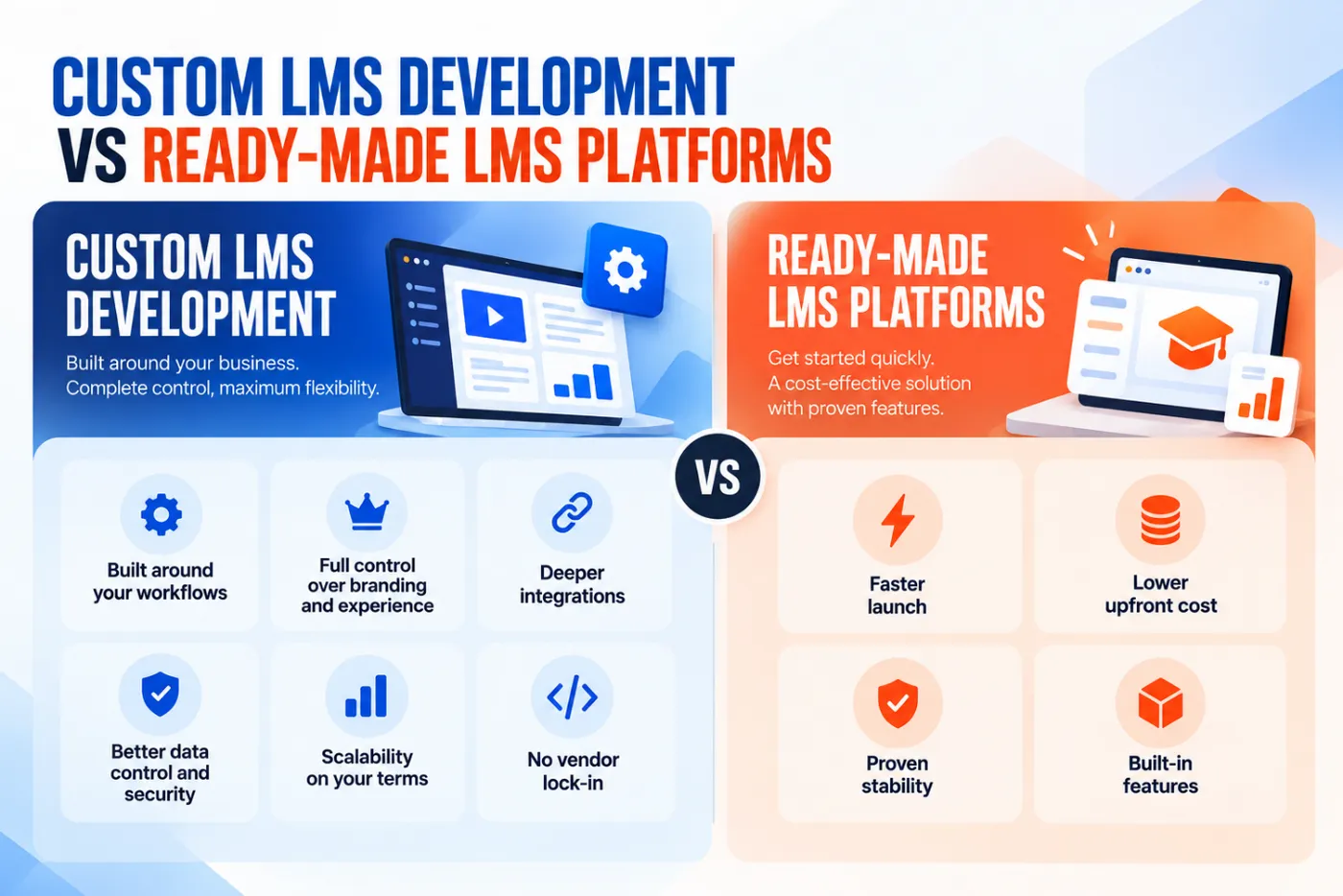
- Built around your workflowsYou choose the features, user journeys and reporting views.
- Full control of brandingYour interface, your domain, your learner experience.
- Deeper integrationsConnects to HR, CRM, payroll and internal tools exactly as needed.
- Better data controlYou decide where data lives and who can access it, which matters under PDPA.
- Scale on your termsAdd only the modules, users and languages you need.
- No vendor lock-inYou own the code and the roadmap.
Benefits of a ready-made LMS
- Faster launchGo live in weeks because the core product already exists.
- Lower upfront costSubscription pricing suits smaller budgets.
- Proven stabilityTested by many users, with the vendor handling updates and fixes.
- Built-in featuresAuthoring tools, quizzes, certificates and basic analytics out of the box.
Custom or ready-made: which should you choose?
Singapore’s LMS market is valued at US$562.6 million in 2025 and is expected to reach US$962.4 million by 2030, a CAGR of 19.9%. That growth is pushing more organisations to decide between building and buying.
Source: MarketsandMarketsIf your needs are simple, your team is small and you need the LMS quickly, choose a ready-made platform. If you have complex workflows, strict compliance demands or a large and growing learner base, choose a custom LMS.
Many organisations land in between: they adopt an existing platform such as Moodle and work with an LMS developer to customise it. This hybrid approach keeps initial costs down while leaving room to grow.
Find your best-fit approach
Tick what describes your project. Two statements are ticked as an example.

Custom LMS vs Moodle vs ready-made: the decision guide
Side-by-side comparison, a fit checklist, questions to ask every provider and a one-page brief to send vendors.
Open the decision guide →What types of LMS can Singapore development companies build?
The right type depends on your users, training goals and business model. These are the most common builds.
Custom LMS
Your workflows drive the platform, not a vendor template. Ideal for unique training models, strict data rules or strong brand identities.
Corporate and enterprise LMS
Compliance training, onboarding and skills development across departments, roles and locations, integrated with HRMS, CRM, ERP or identity systems.
White-label and off-the-shelf
Customise an existing platform with branding, roles, plugins and tweaks to launch faster for less.
Educational institution LMS
Course delivery, assessments, attendance and grading, with virtual classrooms, gradebooks and student or parent portals.
Customer training LMS
Structured courses, certifications and product training for customers, partners and resellers.
Employee training LMS
Internal learning, skills development, mandatory training and progress tracking for your workforce.
Training provider LMS
Instructors, learners, courses, assessments, certificates, payments and schedules on one platform.
Compliance and certification LMS
Proof of completion, renewal reminders and audit-ready reports for finance, healthcare and manufacturing.
Mobile LMS
iOS and Android apps with offline content and push notifications for remote or on-the-move teams.
Final words
Choosing an LMS partner isn’t about who has the best pitch deck. It’s about who can deliver and who fits your business. The best LMS development companies in Singapore share five habits:
Most buyers skip these checks and pay for it later. Start with your requirements, shortlist at least three vendors from this list, ask each the same questions, and request a small demonstration before you commit. The right team will welcome that.
Your teams deserve a platform they actually like using. Find the partner who can build it, and you’ll see results in months, not years.
Frequently asked questions
How long does it take to build a custom LMS?
Usually 3 to 9 months, depending on complexity. A basic platform can be live in about three months, while enterprise builds with integrations, analytics and custom workflows take longer.
Which is the best LMS development company in Singapore for enterprises?
eLearning23 is our pick for enterprise LMS development. It is backed by Brain Station 23's 20+ years of building custom software and LMS platforms for large organisations, with strong integration options, security expertise (ISO 27001, CMMI Level 3) and scalable delivery.
Can LMS companies integrate with existing HR systems?
Yes. Most LMS development companies can connect learning platforms to HR systems, payroll software, identity providers and other business tools, syncing employee profiles, roles and training records.
Do LMS development companies offer ongoing maintenance and support?
Most do. Typical packages include bug fixes, security updates, performance monitoring and helpdesk support for a set period, and many also offer feature upgrades. Check the SLA for exactly what is covered.
What is the difference between an LMS and an LXP?
An LMS manages formal, admin-controlled training. An LXP (learning experience platform) is built for learner-led, personalised learning and content discovery, giving learners more control over what and how they learn.
Do LMS development companies build mobile apps?
Yes. Most build native iOS and Android apps or cross-platform apps, as well as responsive web versions so learners can study anywhere.
What features should a business LMS have?
Course management, user roles, assessments, progress tracking, reporting, certifications, notifications, integrations and security controls. Larger organisations may also need SSO, multilingual support, mobile apps, automation and advanced analytics.
Is custom LMS development better than an off-the-shelf LMS?
It depends on your needs. A custom LMS supports unique workflows, branding and deep integrations but costs more and takes longer. Off-the-shelf platforms are faster and cheaper for standard needs. Decide on budget, timeline and how specific your requirements are.